
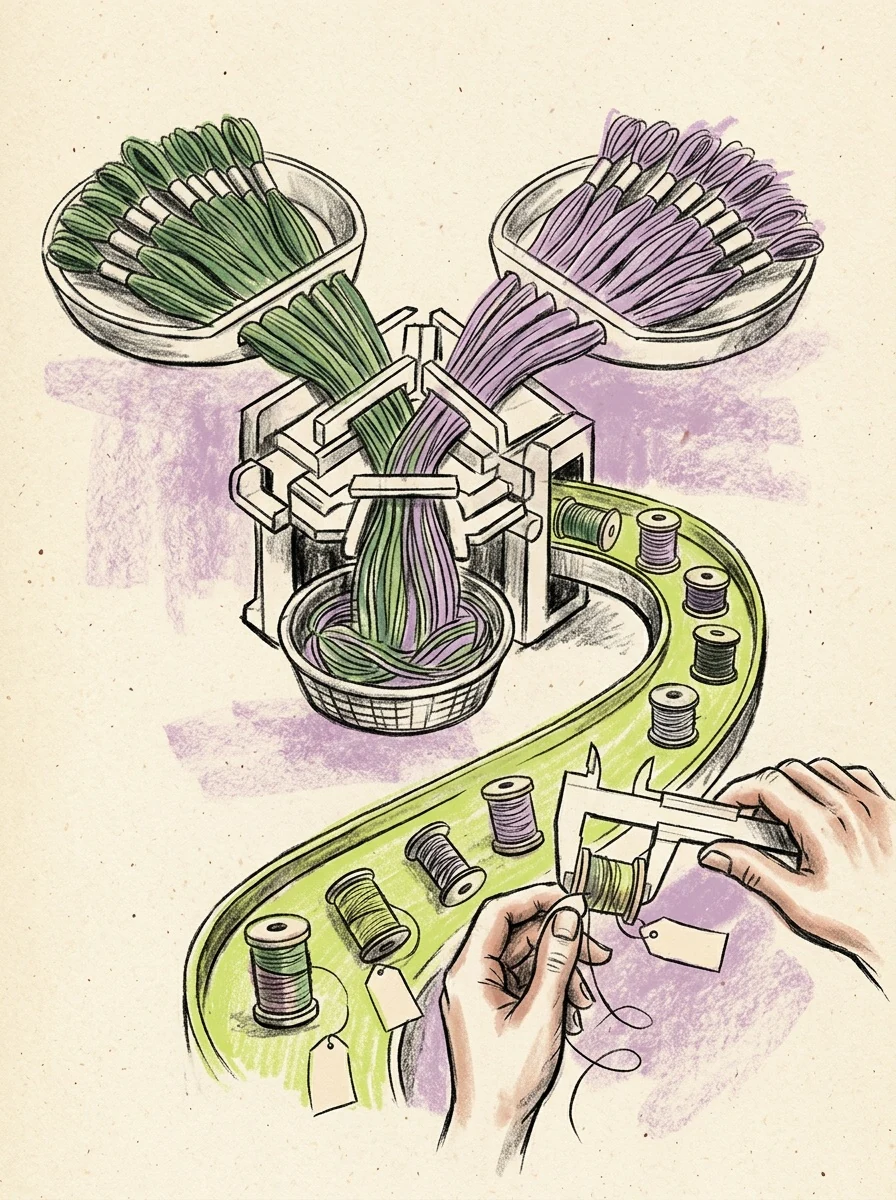
Find backlink gaps
Competitor-only referring domains and authority evidence. Give your connected LLM the build instructions to create this reusable tool.
 SE Ranking
Locally tested reference · Live providers not tested
- What you provide
- Your domain and one competitor domain. The reference compares ten backlinks per domain and checks up to five new referring hosts.
- What you get
- Competitor-only referring domains and authority evidence.
How your tool works.
Find referring hosts unique to a competitor's bounded backlink sample. API requests and parsing are implemented in the reference function backlink_gaps.
Your agent writes and saves the Python tool. Recurse supplies eligible API access and cloud execution. You can ask your agent to edit it and run it again.
The output.
Competitor-only referring domains and authority evidence.
Locally tested synthetic sample
{
  "records": [
    {
      "host": "new.example",
      "authority": [
        {
          "url": "new.example",
          "inlink_rank": 20,
          "domain_inlink_rank": 40
        }
      ]
    }
  ],
  "missing": []
}
The APIs in your tool.
Use eligible APIs through your Recurse balance. You do not need to open a separate provider account or fund a separate wallet for these operations. Operations requiring your own connected account remain subject to availability.
- SE Ranking$0.000179 / row
seranking.web.backlinks.listPrice evidence and conditions
per_result · 1 credit per 1 row. Checked 2026-07-28. Source: docs. Confidence: documented.
1 credit per BACKLINK returned, 0 per request — `limit` is the entire cost. Pulling a 10,000-link profile costs 10,000 credits.
Price source · API documentation - SE Ranking$0.002685 / target
seranking.web.url.metricsPrice evidence and conditions
per_result · 15 credit per 1 target. Checked 2026-07-31. Source: observed. Confidence: verified.
15 credits per TARGET, 0 per request. OBSERVED 2026-07-31 — one isolated call on a fresh target moved units_left by exactly 15, twice-settled. The docs list 10, and the 10 is the DOMAIN half alone: /v1/backlinks/authority/domain is 10 and /v1/backlinks/authority/page is 5, and this combined route returns both and charges their sum. Ask for the half you need if you only need one side — the combined call is 50% more than the domain score by itself.
Price source · API documentation
These are dated API unit rates, not a whole-task quote. Your agent checks current availability and costs before execution. Settled provider costs pass through at 1×; preparation and execution compute are charged at 4×.
Build it with your agent.
Your agent asks for missing inputs and a total spending cap before chargeable work.
Read the full build instructions
Build and save a reusable Recurse tool called backlink_gaps.
Inputs: Your domain and one competitor domain. The reference compares ten backlinks per domain and checks up to five new referring hosts.
Execution logic: Find referring hosts unique to a competitor's bounded backlink sample. API requests and parsing are implemented in the reference function backlink_gaps.
Output contract: Competitor-only referring domains and authority evidence.
Declared APIs: seranking.web.backlinks.list, seranking.web.url.metrics.
Inspect these APIs' current executable status, native parameters, response examples and costs. Resolve and test response-field mappings before writing dependent steps; supplier response schemas in this research snapshot are incomplete. Do not silently substitute APIs. Implement the sequence, joins, filters and calculations in plain Python with from recurse_apis import call. Validate input and JSON output schemas in tools.yaml; lock dependencies in uv.lock. Keep interpretation outside the tool. Use at most 20 sequential API requests, 64 KiB inputs, 256 KiB results and 300 seconds. Limit fetched pages/posts and truncate evidence explicitly. Return null with a reason for missing fields; do not invent dates, contacts, prices or counts. Create success, empty, malformed-response and provider-error tests. Ask me for the missing inputs and one total spending cap before chargeable preparation. Build the standard source archive and perform Recurse's scoped HTTP upload; never send inline source to private_stage. Inspect the prepared function before private_call. Reuse prepared source for later invocations and retain its version ID. If this interface cannot build files and perform the upload, explain the missing capability and provide the source project for a capable interface. Return the receipt and structured result here. Do not publish, send messages or start ongoing monitoring.
Before you start.
Your interface needs file creation, source bundling and scoped HTTP upload as well as a Recurse connection.
Limits and validation
20 sequential API requests, 300 seconds, 64 KiB input and 256 KiB result per private run.
- A connected Recurse account and sufficient wallet funds are required.
- Authoring requires file creation, source bundling and scoped HTTP upload in addition to MCP.
- Public data may be incomplete, stale, unavailable or sample-limited.
- Recheck current API access, prices and response-field mappings before paid execution.
- A fresh invocation is required for a fresh observation; no background scheduler is included.
The reference implementation passed local fixture tests. Live provider execution has not been tested.